

What Is Predetermined In Your Life?
The rules you stop questioning become the life you accept.


The pavement in California holds heat differently on a summer night.
Thinking back, I can still smell the oil of the asphalted urban jungle.
I’m 24—barely a decade ago—sleeping at the Maidu skate park in Roseville.
I had figured out that if you lay flat on the asphalt around 11 PM, you could feel the day still radiating up through your back.
Oddly relaxing; nostalgic.

I had a BMW parked a block away that I couldn’t afford and couldn’t sell without going further upside down on the loan. I was trading Magic cards to 12-year-olds for L&L BBQ and Little Caesars $5 pizza on Sunrise boulevard.
And I remember looking up at the stars thinking—how nice is this? How lucky am I?
That sentence has stayed with me. Not because it was profound. But because it was true.
I had absolutely nothing and absolutely everything at the same time. I had perspective.
If this is the worst it gets, why am I so afraid to live?
I had decided the answer was that I shouldn’t live, just a few days earlier.
I even had a plan.
I was standing on the railing of the Foresthill Bridge, 30 minutes north.

I had been there a while. I don’t remember most of what I was thinking—I remember the kind of quiet that arrives when you’ve stopped negotiating with yourself.
Someone drove by and shouted “Jump, pussy.”
Gee. Thanks.
And it snapped me out of the trance.
I gasped for a breath—and my heart pumped ice through my veins.
I climbed down. I drove back to Roseville shaken to the core.
A few nights later I was in the skate park, looking at stars, feeling the heat come up through my back, asking the wrong question of myself for the first time in years.
Not “Why should I keep going.”
“Why am I so afraid to live?”
What I Was Supposed to Be
I am the child of rape.
My mother was 20, in Narcotics Anonymous trying to get clean from heroin, when she was assaulted.
She kept me.
I didn’t know any of this until I was almost 30. Perhaps ignorance really is bliss.
The man who raised me, who I will forever call my father, came into my mother’s life when she was seven months pregnant and chose this.
He was 20.
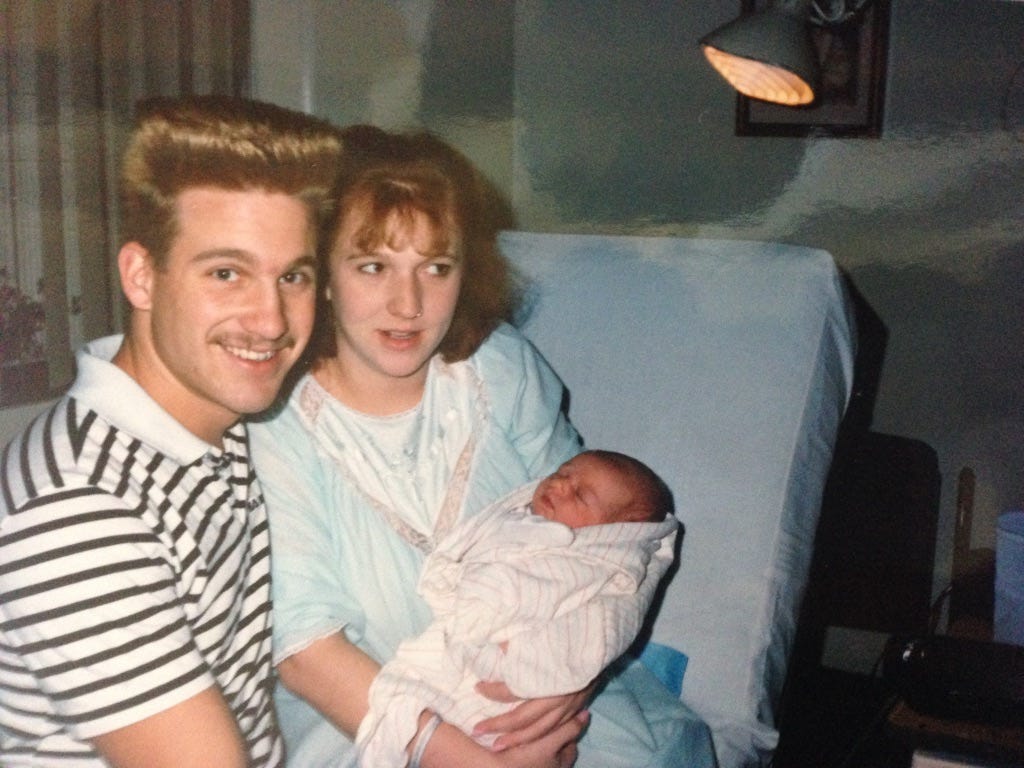
When I was 20, I could barely do my own laundry.
By many measures, I was not supposed to be here at all.
There are entire forums on the internet dedicated to arguing that pregnancies like the one that produced me should be ended early.
I am the poster child for that argument.
It is a strange thing to reconcile with the life I have today.
That was just the beginning.
I grew up inside substance abuse and domestic violence.
The house I came home to was not safe.
I learned early to read tone, footsteps, the angle of a jaw, the ounces remaining in a fifth of hard liquor or how many spilled rings of Bacardi hung around the base of a shot glass.
You know—all the small signals that tell a kid how the next hour is going to be.
I made myself small.
I quieted my footsteps in the hallways of my own house.
I still do.
Grown ass man, six-three, walking through my own home in Montana with nothing to fear—but I catch myself stepping softly through my house to avoid alerting the demons.
Some things you don’t unlearn. You just notice about yourself.
By other measures, I was not supposed to make it past the bridge.
And I am not even the worst case in my own house.
My wife Mary’s predetermined outcome was worse than mine.
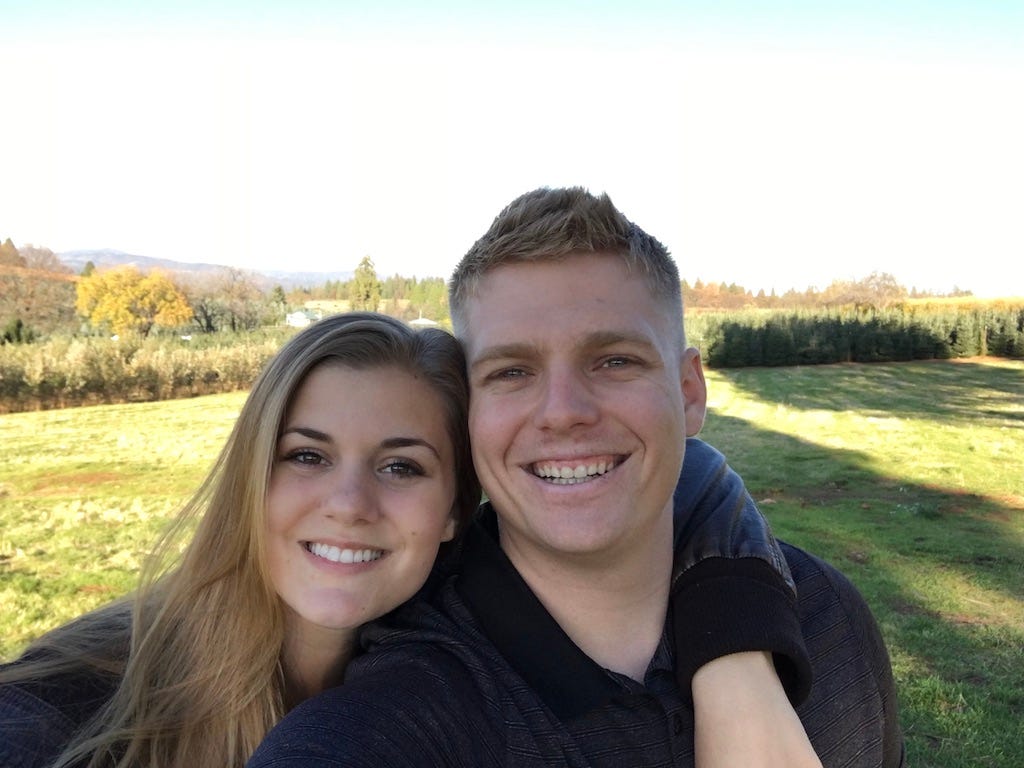
She was the youngest of five girls raised in a single trailer in the woods, born to meth-addicted parents—five girls to multiple fathers, the kind of household that has a script for how it ends.
Her mother found out she was pregnant with Mary during a car accident, four and a half months along, high on meth.
Mary refused to read the script. It’s one of the countless things I adore about her.
When I met her, she had more clarity about what her life was going to be than I have ever had about anything.
She learned from the mistakes of others. She refused to be a victim—coming from a world where success looked like not getting pregnant at 12.
She is the one who taught me what self-agency looked like, because she had it before I knew it was an option.
In ‘23 our first son Noah was born with cystic fibrosis.
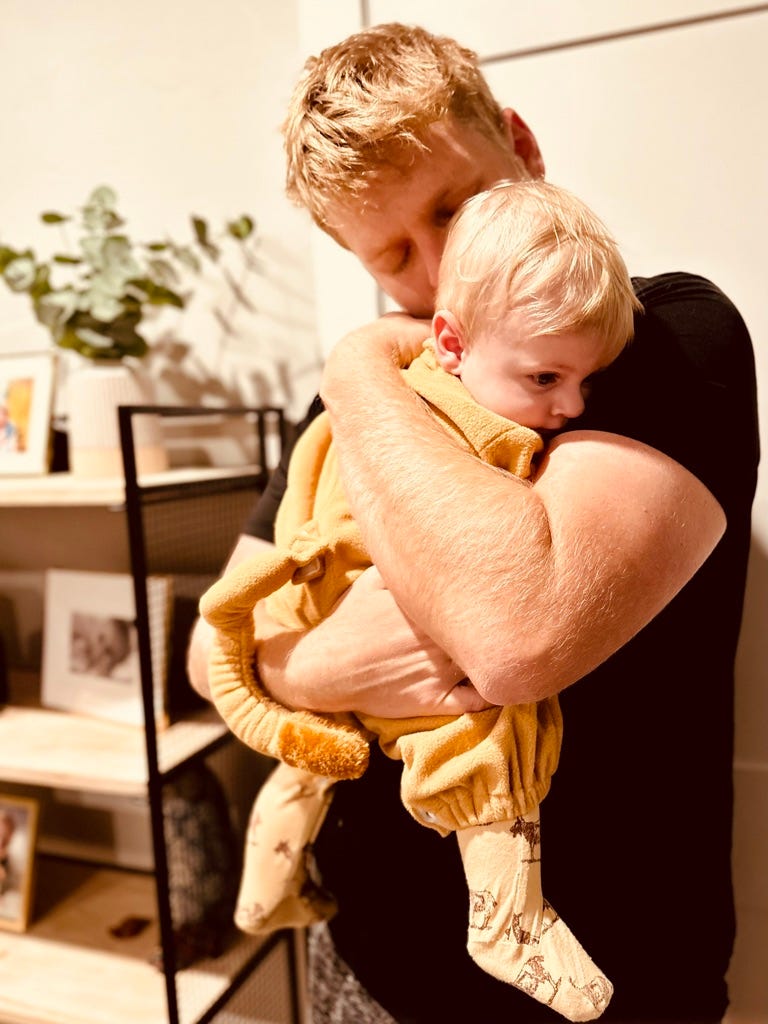
Less than a decade ago, his life expectancy was under 7 years.
The medical literature said don’t bother.
By the time he was born, gene modulators like Trikafta had changed the math so completely that he will likely never experience symptoms and has a full life expectancy.
The Cystic Fibrosis Foundation funded the research that made that true. The Cody Dieruf Foundation, here in Montana, makes sure families in the Northern Rockies—hours from any specialized care—can actually access it.
I will spend the rest of my life paying both of them back.
Our second son Nathan was born premature and spent weeks in the NICU, his lungs fighting to do what lungs are supposed to do. It didn’t look good.
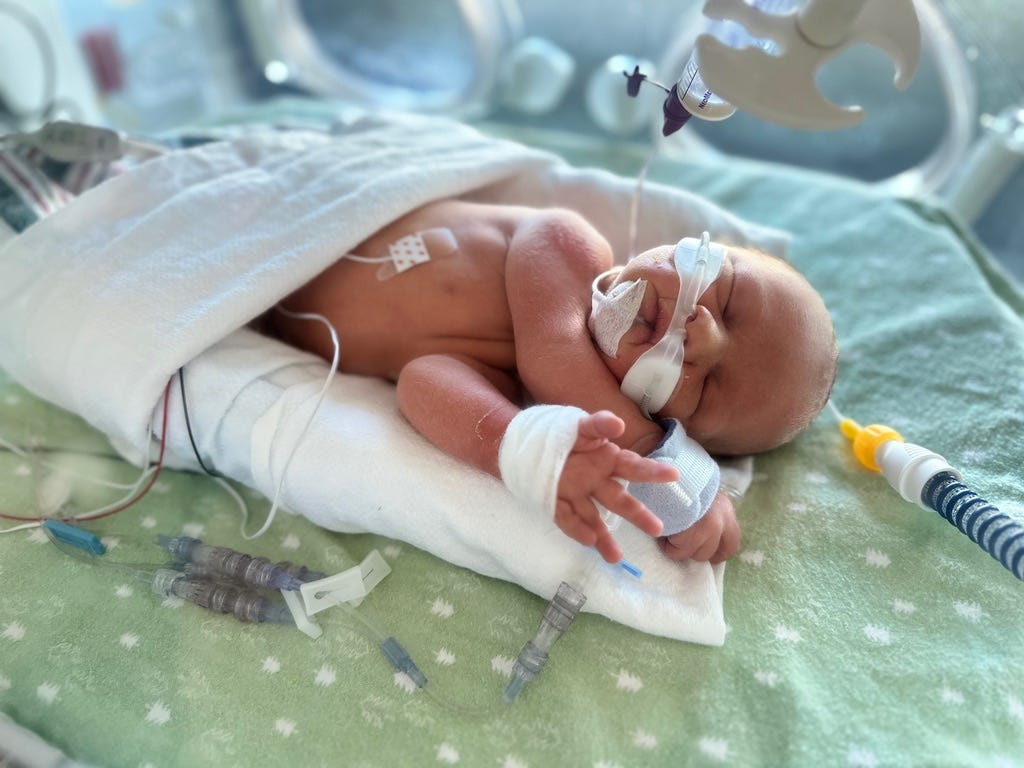
Let’s just say, his lungs are working damn good now as testament to his 4am escapades.
The question I have been carrying since the skate park, and the question this newsletter has been circling for over a year—and the question my forthcoming book is named after:
What is predetermined in your life?
What I Got Wrong About It
For most of my life, I thought the answer was most things.
I thought the way you were born determined how the world treated you. I thought the situations you got placed in defined the ceiling. I thought job descriptions were laws of physics. I thought salary bands were real.
I thought authority—the kind that came from titles and credentials and gray hair and pedigree and money—was something other people had access to and I didn’t.
I was wrong about almost all of it. I learned that it could be manufactured.
Cialdini would approve.
The disadvantages are real. I am not pretending otherwise.
Mary and I spend a lot of time talking about how to engineer adversity into our kids’ lives precisely because we know what its absence does. Jeesh, what an incredibly privileged thing to say.
Unfairness is real. The systems built to write your future before you walk into the room are real.
What I got wrong was assuming the story was finished.
I started applying for jobs that required credentials I didn’t have. I got some of them. I started naming my own number instead of accepting what was offered.
The offers changed. They got bigger.
I started telling people what to think about me before they could fill in the blanks themselves.
They thought what I told them to think.
To be honest, most of what I did—didn’t work.
For every job I got that I had no business getting, there were hundreds of rejections I deserved and a few I probably didn’t. I applied to a thousand jobs in a day—when easy apply was truly easy.
I must have got nine hundred and ninety something nos. The other few became something I could learn from.
My rejection ratio never really improved.
The thing I had going for me wasn’t talent. It wasn’t credentials. It wasn’t even the chip on my shoulder, though that helped.
It was that none of the rejections compared to the house I’d come from. None of them compared to the bridge.
So when someone told me no, I laughed.
What were they going to do—make me feel small? M’kay.
Make me feel scared? Try harder.
I never cared much for the people telling me no. So I didn’t care much about what they had to say.
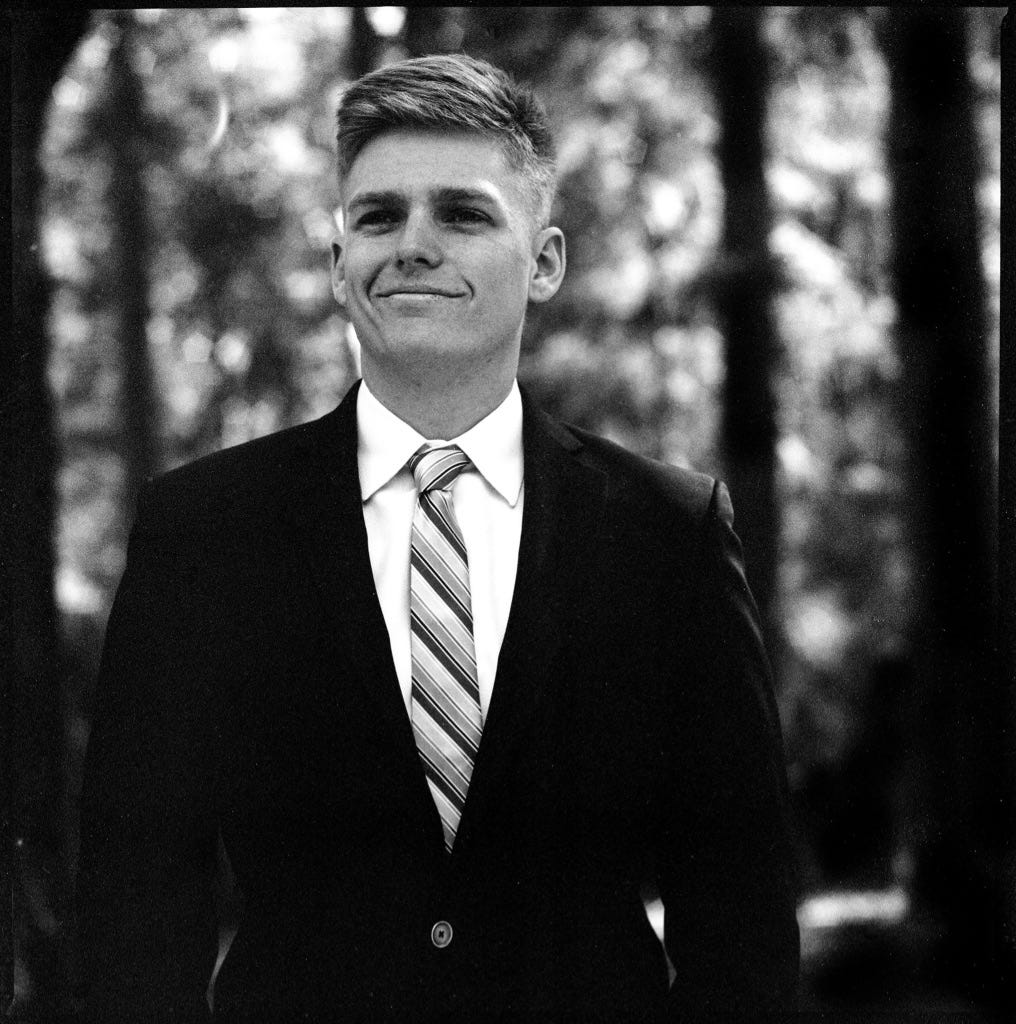
Rather, I focused on finding the few who did.
None of this was magic. None of it was easy.
Most of it took breakthroughs I cannot fully explain, lucky breaks I did not deserve, and the kind of grinding unglamorous work that is invisible to everyone except the person doing it.
Mary’s belief in me did most of the heavy lifting—all granted through God’s grace.
So did the strangers who, for reasons I still don’t understand, decided to give a young kid with a chip on his shoulder and no degree a chance at jobs that should have gone to someone with three.
Ignoring “the rules” started working for me.
But if I could have you as the reader understand one thing from every article I’ve ever published in this newsletter it’s that:
The predetermined story is the story you accept. Not the story that’s true.
The Cost of Refusing
From 2016 to 2021, I had built a company called Discover Podium to a few million in ARR.
Twenty-five employees. A thousand clients a year.
The kind of momentum that gets you on lists.

We helped executives find work at companies like Google, Apple, Cisco, and the hundreds of mid-market tech companies that were hiring like crazy in the late 2010s.
I had no business running a company at all, let alone one that was working.
Then COVID hit.
By April of 2020, I had spent a month on the phone with my employees and their spouses, telling them I would do everything in my power to keep their family employed through whatever this was about to become.
Some of them had just had babies.
Some were caring for elderly parents.
All of them had trusted me when I made that call.
I spent countless hours on the phone negotiating with former satisfied clients that had disputed their charges on services rendered over 12 months prior in economic panic.
Losing the funds for your payroll while accounts are in dispute for 90 days is maddening, I tell ya.
We weathered the storm and bounced back stronger.
Later in the year, I got an offer to sell the business for several million dollars.
The condition was that I had to fire my team.
I said no.
Then I went into personal debt and unwound the company over the course of a year.
I took the PPP loans the government issued and gave every dollar of them to my staff—paid them probably too generously, structured it like severance, pointed half my sales team’s bandwidth at finding placements for the other half.
By the end, the business was worth nothing.
The thing that could have made me wealthy was gone.
I moved my family to a 1,200-square-foot house in Montana with the last $10,000 I had to my name. Gained 100 pounds in sadness over the next year—and sat with whether any of it had been worth it.
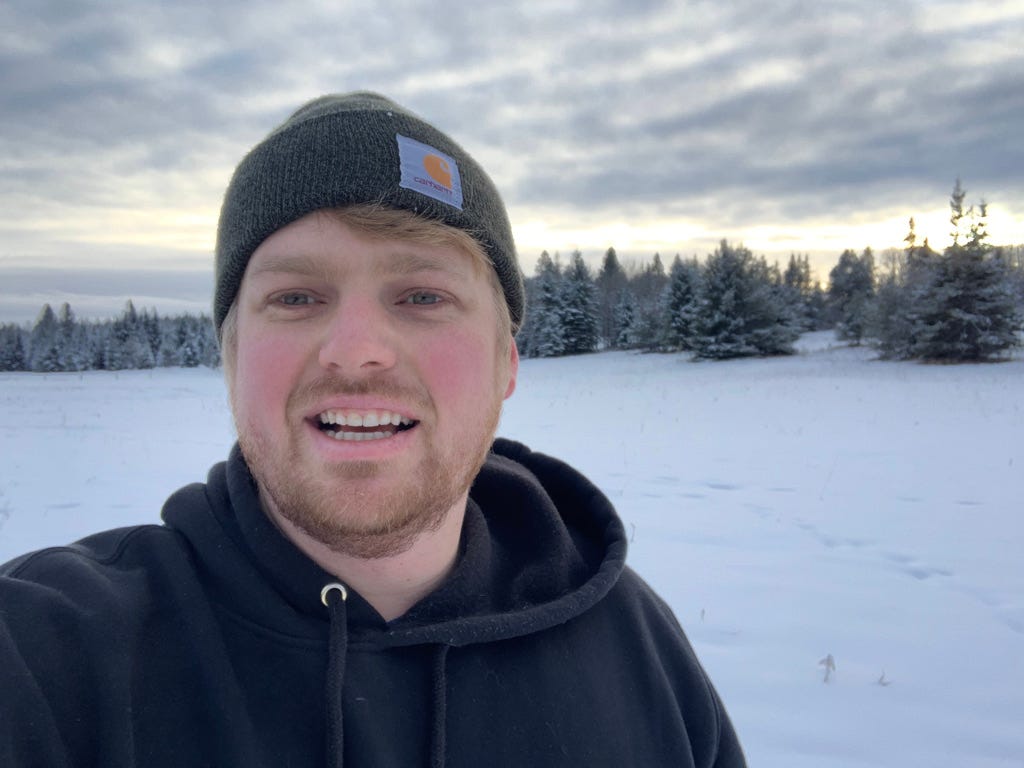
I tell that story not because it was virtuous.
I tell it because predetermined-refusal isn’t a feel-good slogan.
It is a discipline that costs you things. It’s real life.
The predetermined good outcome was right there. Sell the company. Take the money. Move on. Everyone would have understood. My advisors actively wanted me to.
My soul did not.
The people I was trying to protect would have been laid off three months later anyway when the buyer restructured—that’s how those deals always end.
Refusing it cost me a number I still don’t entirely want to think about.
Most of the people I protected don’t remember me. A few of them probably still think I was the toxic CEO who couldn’t keep the company alive. The math doesn’t reconcile. It still doesn’t.
That was the trade. I would make it again.
The point isn’t that I made the right call.
Reasonable people would have made the other one and slept fine. The point is that the call existed at all—and that the predetermined script for that moment was so loud, so obvious, so endorsed by everyone around me, that I almost couldn’t hear myself thinking otherwise.
That’s the cost of treating other people’s voices as your predetermined decision.
It doesn’t tell you the wrong answer.
It removes the question. It destroys your curiosity—no matter how naive it seems in challenging it.
Where the Thesis Lives Now
Everything I just told you about my own life applies to your career.
Not as metaphor. As mechanism.
If you are reading this as an executive, here is what predetermined means for you:
Your last comp number is not your next one. The ceiling you were told exists doesn’t.
The salary band is a compliance filter, not a law of physics.
The recruiter who told you the budget is fixed is repeating a script that was written before they were hired.
The room you are in right now is not the only room.
The people deciding your future are not deciding it with information you don’t also have access to.
The story you have been told about what kind of trajectory is realistic for someone like you was written by people who needed you to believe it.
Most of them don’t even know they were writing it.
The script is institutional. Nobody is twirling a mustache.
The HR business partner who told you the comp band caps at $X genuinely believes the comp band caps at $X. The recruiter who said we don’t have flexibility on equity genuinely believes there is no flexibility on equity.
They are not lying to you. They are repeating what was repeated to them.
That is what makes it dangerous.
The script doesn’t need a villain to keep working. It just needs everyone in the room to stop questioning it.
Your job is to question it.
If you are reading this as a CHRO, a board comp committee member, or someone who designs the systems on the other side of the table, here is what predetermined means for you:
The compensation architecture you inherited is telling your best people their futures are predetermined.
The bands. The merit cycles. The succession plans.
The we don’t make exceptions for individual contributors at that level.
All of it is a story your organization is telling about what people are worth—and your sharpest leaders are starting to notice the gap between the story and the math.
You are losing the people you cannot afford to lose because they figured out the script before you did. The fix is not better retention bonuses. The fix is honest architecture.
It’s about value-expansion through alignment not slice-carving through adversarial positions.
The most expensive talent decision your company makes this year will not be the one you flag as a comp decision. It will be the one your most valuable VP makes quietly at her kitchen table on a Tuesday night when she finally lets herself ask the question her boss has spent two years training her not to ask:
What if none of this was actually predetermined?
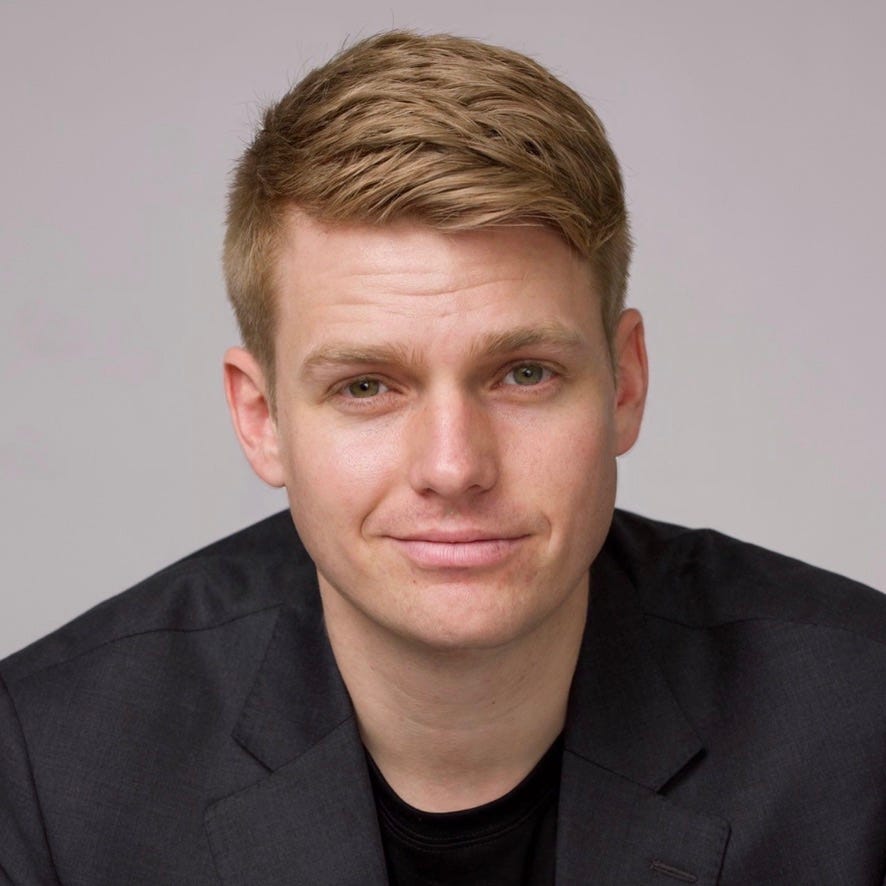
That question, asked one time, is worth more than any retention package you will ever write.
What’s Coming
I have been quiet about most of this until now. The readers who have been showing up here every Thursday for several years deserve to know what they have been part of building.
The book is real.
Predetermined: Rewrite The Rules To Command Your Life is in active development with a Q3 2027 launch.
Publisher conversations are underway. The manuscript is being shaped from the same material that has been showing up in these articles—the frameworks, the client stories, the thesis that became the title.
A preorder waitlist is opening soon.
It serves from survival all the way through self-actualization.
A portion of every book sold will go to the Cody Dieruf Foundation. If this thesis means anything, it means making sure other families don’t have to figure out how to fight a rare disease alone in the Northern Rockies.
That is the version of not predetermined I care about most.
The podcast is coming.
I am building a show about leaders who have overcome predetermined circumstances—the people whose statistical outcomes said one thing and whose actual lives said another. Different stories than mine. Bigger stories than mine. The conversations I wish I had been able to find when I needed them most.
More on the format and the first guests soon. The show will live alongside this newsletter, not replace it.
This newsletter has made all of it possible.
Every share. Every comment. Every reply. Every person who forwarded an article to a friend who needed it. Every reader who became a paid subscriber not because they needed the perks but because they wanted to bet on the work.
You are the reason any of this gets to exist.
The “Why I Finally Called It Quits With LinkedIn” piece reached more people than I knew how to reach on my own.
You did that. Not me. Not the algorithm I had just deleted.
You.
I do not take that lightly.
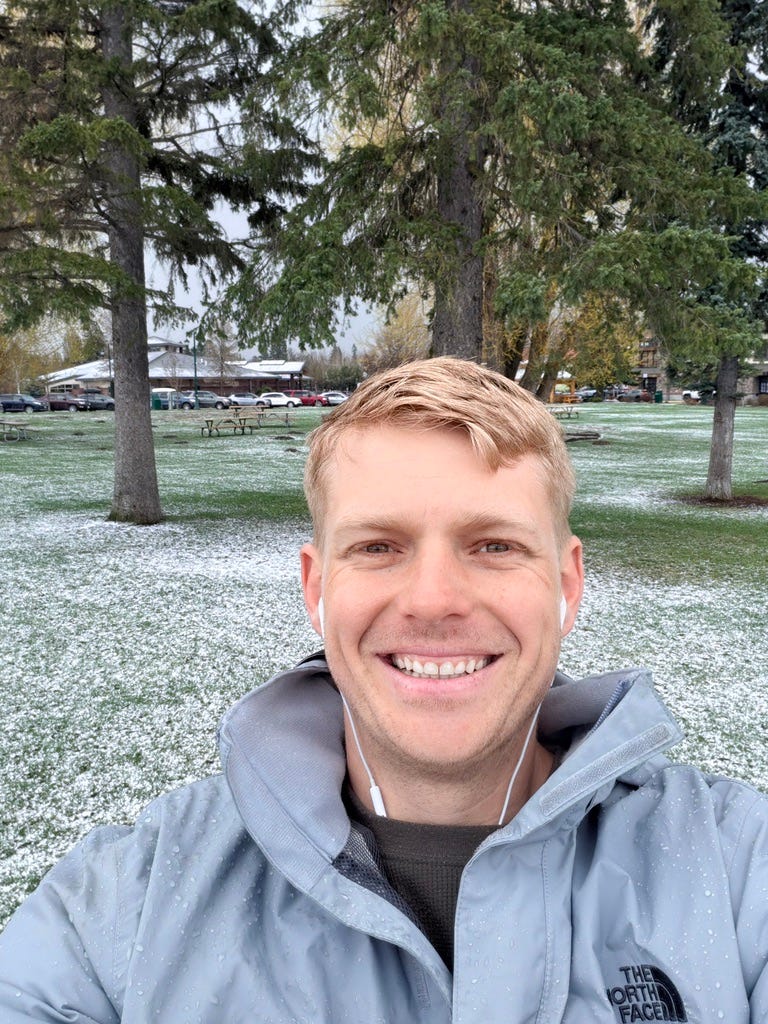
PS—quitting LinkedIn gave me enough time back to average 15,000+ steps a day and lose all of those 100 pounds back—good riddance LinkedIn!
One thing I would love your help on.
If you want on the preorder waitlist when it opens, drop the word PREDETERMINED in the comments below.
I will make sure you are first in line when the doors open, and first to know about the podcast launch, the early chapter reads, and anything else that comes from this body of work in the months ahead.
This is the part of the work I cannot do alone.
The Conversation
Nils Vinje asked me on his podcast what I think is actually predetermined for us in life.
We talked for 90 minutes. It is the most I have ever said out loud about any of this—the skate park, the biological father, the company shutdown, and the question I have been carrying for the last decade plus.
If the article was the thesis, the podcast is the evidence.
Work with me directly. Every session credits toward representation.
Stay fearless, friends.
PREDETERMINED! Thank you Jacob for sharing your inspiring story with us. I am excited for the book, and watching you continue to grow and navigate this path in this exciting new chapter of life. Thank you!
Predetermined