

Most Rules Are Just Habits Nobody Questioned
What I wish someone had told me at 16—and the one idea everything I've built sits on top of.


The compliment I hear most often from clients isn’t about the money.
It’s this:
“Man, I wish I’d known about you twenty years ago.”
I nod. I smile. I say something gracious.
And I think to myself—what if you had?
What if I had?
What if someone had sat 16-year-old me down and said here’s the one thing you need to know before you walk into any room for the rest of your life.

Not a framework. Not a tactic. Not a seven-step playbook.
One idea. Small enough to fit in a kid’s head. Big enough to change a life.
I’ve spent fifteen years negotiating executive contracts against some of the most sophisticated compensation teams in the world. Over a billion dollars in outcomes. Thousands of engagements.
And when I strip all of it back—every tactic, every framework, every piece of IP I’ve built—it all sits on top of a single idea I didn’t learn until I was almost 30.
Here it is.
Most of what you think are rules are just habits other people got tired of questioning.
That’s it.
The salary band is a habit.
The job description is a habit.
The “we don’t make exceptions” is a habit.
The seven rounds of interviews.
The merit cycle.
The comp band.
The hierarchy.
The way meetings work.
The way promotions work.
The way somebody decides what you’re worth.
All of it was written by people who are no longer in the room.
Most of the people enforcing those rules today can’t tell you who wrote them, when, or why. They’re repeating what was repeated to them.
Nobody is lying. Nobody is being malicious.
The system just keeps running because nobody thought to press pause and ask whether the rules still make sense.
That’s not a conspiracy. That’s just how institutions work.
And once you see it, you can’t unsee it.
What This Looks Like in Real Life
I had a client last year—brilliant operator, first-generation career professional, terrified of asking for more than what the recruiter offered.
Her mother raised her to be grateful. Her father raised her to work hard.
Both of them raised her on rules they learned from their parents—rules built for a labor market that no longer exists.
She walked into the negotiation believing the offer was the offer.
We added $340,000 in year-one comp and a severance provision her recruiter told her wasn’t possible.
The company agreed to all of it in under 72 hours.
Nothing had changed on their end.
They hadn’t suddenly gotten more budget. The “no flexibility” wasn’t a fact—it was a habit. A script the recruiter had been trained to recite because most candidates stop asking the moment they hear it.
My client didn’t stop asking.
That’s the whole difference.
The Version I’d Give a Kid
Here’s how I’d say it to my 16-year-old self. Or to yours. Or to Noah and Nathan when they’re old enough to hear it.
Most of the rules you’re going to run into in your life were written by somebody else for somebody else a long time ago.
Some of them are real. Gravity is real. Kindness is real. The consequences of lying are real.
Many of them aren’t.
Question everything.

Many of them are just the path of least resistance—the version of reality that’s easiest for everyone to agree on because questioning it would take work.
Spoiler alert: You’re allowed to question it—and in some cases, you’ll be rewarded for it in an outsized manner.
And finding success doing so—especially over and over again—is highly addictive.
You’re allowed to ask why does it work this way? out loud. You’re allowed to ask who decided that? and when? and what happens if I don’t?
You’re allowed to look at the rule. Look at the person enforcing it. Look at the cost of breaking it. And make your own decision.
That is the whole skill.
Not confidence. Not charisma. Not some special gift.
Just the willingness to ask one more question after everyone else has stopped.
Why Nobody Teaches This
Because it’s dangerous.
Not to you—to the system.
If every kid grew up knowing that most rules were negotiable, institutions would have to work a lot harder to enforce them.
Schools would have to explain why the bell rings every 47 minutes.
Companies would have to explain why the raise is capped at 4%.
Governments would have to explain a lot of things they’d rather not.
So the skill gets buried. Not maliciously. Just by default.
The kids who learn it usually learn it by accident—from a weird uncle, a rebellious friend, a book nobody assigned them, or a hard-enough life that following the rules stopped feeling like an option.
I learned it the hard way. Most of my clients learned it the hard way. Almost nobody learns it on purpose.
That’s what I’m trying to fix.
My Ask
If you have kids, tell them.
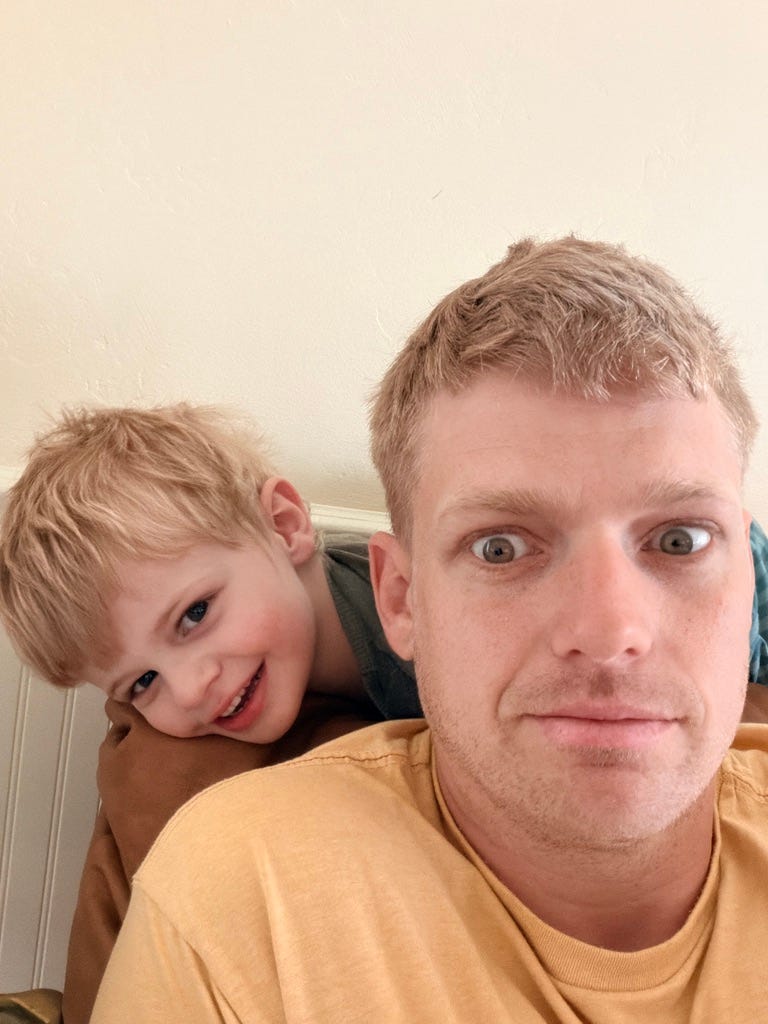
But maybe tell them to questions others and not simply defy your parental authority. Spoken from my experience raising a one year old and three-nager.
Not when they’re 25 and already mid-career and wondering why their salary hasn’t moved in four years. Tell them now. Tell them at 10. Tell them at 14. Tell them at 22 before the first offer letter shows up.
Most of what you think are rules are just habits.
You’re allowed to ask why.
You’re allowed to ask what if.
You’re allowed to walk in and build a life that looks nothing like the one the script had in mind for you.
That single sentence, delivered at the right age, is worth more than any MBA, any network, any inheritance.
It’s the thing this entire body of work is built on.
And next week, I’m going to tell you where it came from — and what it cost me to learn.
Work with me directly. Every session credits toward representation.
Stay fearless, friends.